When people hear "MLS," they might think of Major League Soccer. In real estate, MLS stands for Multiple Listing Service, the private database that cooperating brokers use to share information about homes that are for sale, under contract, or sold. Whether you're browsing Red Oak Realty's home search or scrolling Zillow, nearly everything you see about a listing started in the MLS. Knowing how the system works, and what's changed about it recently, helps buyers and sellers get the most out of it.
What the MLS Actually Does
The MLS isn't a public website. It's a private database that only licensed real estate professionals who belong to a participating association can access. Through it, agents and brokers share real-time details on active listings, along with historical data like sale prices, property taxes, and ownership records.
That access translates into real advantages. Buyers' agents can set up automatic alerts the moment a matching home hits the market. Sellers' agents pull comparable sales, known as comps, to help set a list price that reflects what's actually happening in a neighborhood right now, not what a home sold for two years ago.
Local Tip: Ask your agent to set up automatic MLS alerts as soon as you start your search. In a fast-moving East Bay market, homes can go under contract within days of hitting the market.
How MLS Listings End Up on Zillow and Other Sites
Shortly after an agent enters a listing into the MLS, it syncs out to a wide network of real estate websites, including Red Oak Realty's current listings for sale and third-party portals like Zillow. That syndication is why the same listing tends to look nearly identical no matter where you view it: the MLS is the original source, and everything downstream is a copy of that record. This also levels the playing field for buyers, since regardless of which site you prefer, you're seeing the same active inventory as everyone else.
Who Runs the MLS in the East Bay?
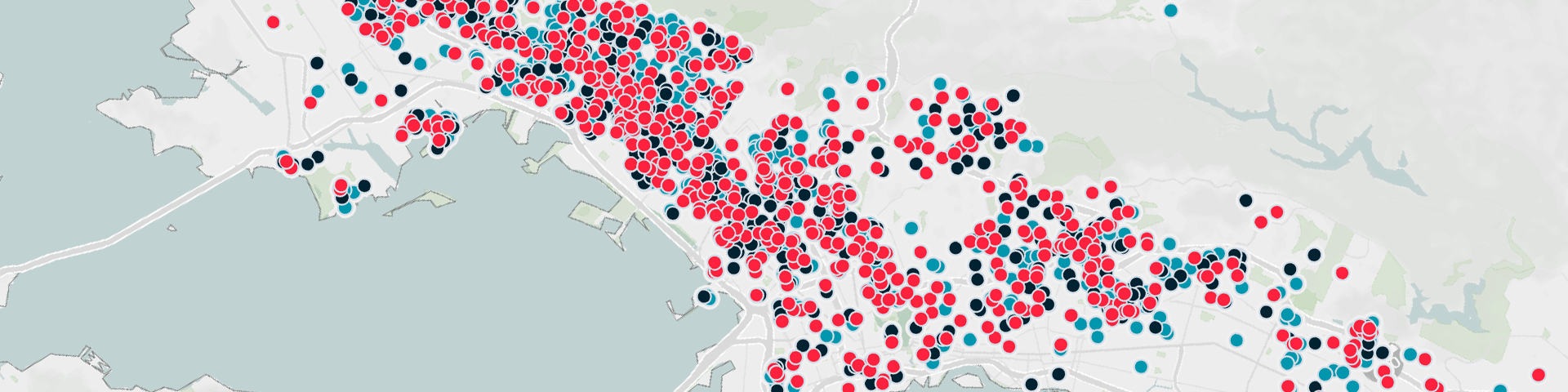
Locally, bridgeMLS is maintained by the Bridge Association of Realtors, which covers Berkeley, Oakland, and the surrounding East Bay. The association corrects listing data, trains members on everything from fair housing law to new technology, and requires ongoing coursework. As a condition of membership, agents must pass regular training on the NAR Code of Ethics and fair housing law, which reinforces that MLS access comes with real accountability. Red Oak Realty covers fair housing protections in the East Bay in more depth if you want the full picture.
Clear Cooperation and Off-Market Listings
The Cost of Pocket Listings
Some sellers choose to keep a property off the MLS, marketing it only to a small group of buyers through what's known as a pocket listing or office exclusive. This can benefit the listing brokerage by keeping the deal in-house, but it usually costs the seller money. A 2023 study by Bright MLS and Drexel University that reviewed nearly 443,000 sales across the Washington D.C., Baltimore, and Philadelphia markets found that homes sold off-MLS fetched about 17.5% less than comparable homes marketed on the MLS, a gap worth roughly $53,890 at closing on the study's median home.
NAR's Clear Cooperation Policy
In response to the rise of pocket listings, the National Association of Realtors adopted its Clear Cooperation Policy, which requires that any listing publicly marketed by a Realtor be submitted to the MLS within one business day. Public marketing covers yard signs, flyers, brokerage websites, and even email blasts, so once an agent starts promoting a home outside their own office, the clock starts.
What's New: Multiple Listing Options for Sellers
In 2025, NAR kept the Clear Cooperation Policy in place but added a companion policy called Multiple Listing Options for Sellers. It gives local MLSs the discretion to offer a delayed marketing status: the listing goes into the MLS, where other agents can see it, but the seller can hold off on public advertising, like IDX feeds and third-party sites, for a set window. Sellers who choose this route sign a disclosure acknowledging they're giving up the exposure that comes with immediate public marketing. It's a middle ground between a fully public listing and a true pocket listing, and it's worth asking your agent whether your local MLS has adopted it.
Main Takeaway: The Clear Cooperation Policy still requires public listings to reach the MLS within a business day, but sellers now have an official, disclosed option to delay public advertising rather than going fully off-market.
"Coming Soon" Listings Still Give Buyers an Edge
Many MLSs, including bridgeMLS, use a "Coming Soon" status for listings that aren't public yet but will be shortly. These listings are visible only to MLS members and already include a list price, which tends to create buzz among agents well before a home officially hits the market.
The MLS also tracks "Days on Market" (DOM), a clock that starts once a listing is marked active and stops when it goes under contract. A Coming Soon period doesn't count against DOM, so it lets a home gain early attention without risking the "stale listing" label that can come with sitting active too long. If you're buying, working with a local agent who has this level of access means you can get notified about a home before it's searchable on Zillow or anywhere else.
Why the MLS Still Gets Sellers the Best Price
Your agent's job when listing your home is to get the highest price and the best terms, and the most reliable way to do that is by putting the property in front of the largest possible pool of qualified buyers. The MLS also lets your agent tap into listings from members of nearby Realtor boards, which matters if you're comparing East Bay neighborhoods or considering a move between them.
None of this replaces a good pricing strategy or a solid plan for selling a house in the East Bay. The MLS is the tool that makes both possible. Once you're in contract, the transaction still runs through title and escrow, but getting there in the first place depends on the exposure the MLS provides.
Frequently Asked Questions
Is the MLS the same thing as Zillow?
No. The MLS is the private database where agents originally enter listing data. Zillow and other portals receive that data through syndication, but they don't always keep it current or accurate, which is one reason Zillow's estimated home values don't always match reality.
Can I search the MLS myself without an agent?
Not directly. The MLS itself is only accessible to licensed professionals, but your agent can set up saved searches and automatic alerts that mirror live MLS data, and sites like Red Oak Realty's home search pull from those same feeds.
Are pocket listings illegal?
No, they're legal, but they're restricted by the Clear Cooperation Policy once a home is marketed to the public. A seller can still choose an office exclusive or the newer delayed marketing option, but both come with tradeoffs in exposure and, often, final sale price.
What does "Days on Market" actually measure?
It's the number of days a listing has been active and searchable, starting when it's marked "active" and ending when it goes under contract. It doesn't include time spent in a Coming Soon or delayed marketing status.
Why does it matter which MLS my agent belongs to?
Coverage varies by region. In the East Bay, bridgeMLS, maintained by the Bridge Association of Realtors, gives agents access to the vast majority of local inventory, plus reciprocal access to nearby boards' listings.
Have more questions about how the MLS works for your specific situation? Red Oak Realty has helped East Bay buyers and sellers through the market for decades. Contact us for a custom report on what's happening in your neighborhood.